-
NEW
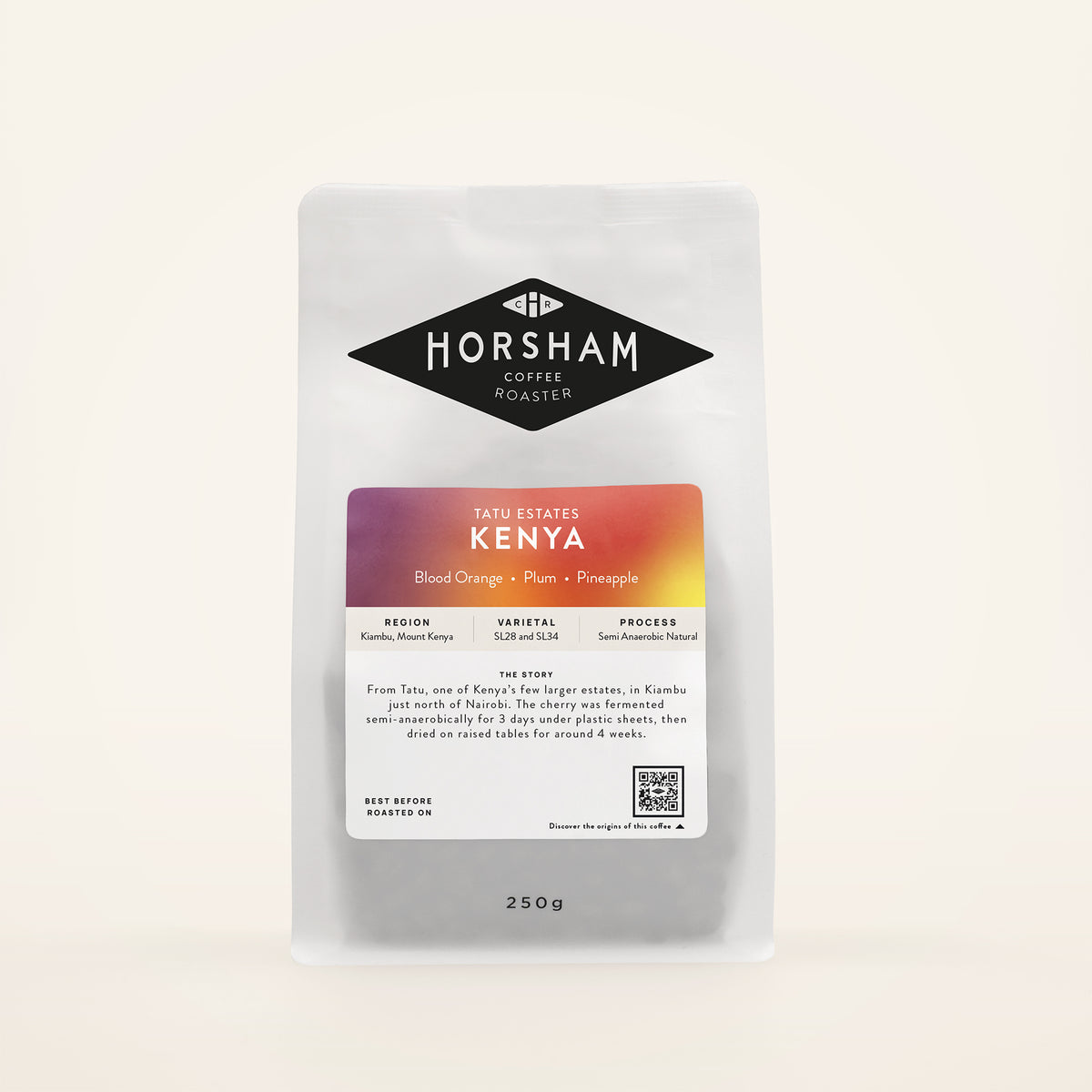
Tatu Estates
Tatu Estates
Couldn't load pickup availability
Roasted In Sussex
Roasted In Sussex
Our roastery is in Burgess Hill, West Sussex and all our coffee is roasted on our Loring Roaster.
Next Day Dispatch
Next Day Dispatch
Place your order by midnight for next working day dispatch. All orders sent via a tracked service.
Brew Recipe
Brew Recipe
This coffee works well for all brew methods.
Filter: Dose 15g-16g, water 250g.
Espresso: Dose 18 gram to 40-42 gram yield over about 30 seconds.
Visit our brew guides for more tips and suggestions.
-
About Tatu Estates | Kenya
Coffee is hand-harvested from mainly SL28 and SL34 trees. This varietal is know for producing coffee with vibrant acidity. After harvest the coffee goes through a complex process starting with flotation to remove defects, followed by a 3-day semi-anaerobic fermentation, with the coffee tightly wrapped in plastic sheets and laid out on raised tables. After the fermentation, the coffee cherry is spread out to dry in a thin layer on raised tables and turned regularly. Drying took around 4 weeks to complete. The coffee is then sent to the dry mill and prepared for export.
This is a distinctive and unusual natural processed coffee with tasting notes that include blood orange, plum and a pineapple. -
Coffee Info
Tasting Notes: Blood Orange | Plum | Pineapple
Processing Method: Natural
Varietal: SL28, SL34, Ruiru and Batian
Importer: Horsham Coffee Roaster / Covoya
The Producer
Tatu Estates
The Tatu coffee is estate is located in Kiambu, north of Nairobi and not too far from the city. The estate covers 120 hectares of land and employes around 80 permenant staff.
Coffee Origin
Kenya 🇰🇪
Kenyan coffee tends to showcase bright, juicy flavours with high acidity. The varietal, high altitude, volcanic soil, climate and processing are all key factors that contribute to the unique Kenyan flavours profile. Discover more about Kenya's history, processing methods and flavours on our Kenyan coffee guide.
Processing Method
Anaerobic Natural
The anaerobic natural process is a modern interpretation where whole cherries are fermented in sealed, oxygen-free tanks before drying. This alters microbial activity, often intensifying the fruit character and developing rich, wine-like or spiced notes. Carbonic maceration natural and anaerobic fermentation natural terms are often used interchangeably in coffee.
Coffee Varietal
SL28 and SL34
Both SL28 and SL34 were developed by Scott Laboratories in Kenya in the 1930s and 40s, selected for drought resistance and high yield. SL28, thought to have origins in a drought-resistant varietal from Tanganyika, is celebrated for its extraordinary cup quality – bold, complex, and bursting with blackcurrant acidity that has become the signature of Kenyan coffee. SL34, likely descended from Bourbon, shares many of those bright, winey characteristics and performs particularly well at high altitudes and in heavy rainfall. Together, they define the renowned Kenyan cup profile.
We clean up after ourselves.
Ecommerce deliveries have a carbon footprint. That's why we support verified projects that remove carbon from the air.
Every delivery’s carbon footprint is calculated based on weight, shipping method, and distance traveled. We neutralize these emissions by purchasing verified carbon removal credits from groundbreaking projects. When you add a contribution to your order, 100% of that money is used to pay for additional carbon removal.
With your purchase, you’ll join a community of proactive merchants and customers dedicated to a sustainable future. Together, we've removed emissions for over 89 million deliveries and removed over 61 thousand tonnes of carbon.
We work with a network of pioneering carbon removal companies that have been vetted by the commerce platform Shopify.